openQSE: Co-Designing the Quantum Software Stack from Applications to Control Systems

Overview

openQSE: Co-Designing the Quantum Software Stack from Applications to Control Systems

As quantum computing evolves from isolated experimental platforms toward integration with high-performance computing (HPC) environments, the need for interoperable quantum-HPC software infrastructure is becoming increasingly urgent. Developing such middleware requires co-design across the full quantum computing stack. Application-level choices about how problems are formulated and expressed in quantum workflows directly influence how workloads are compiled and executed on hardware. At the same time, constraints imposed by hardware control systems and device execution models shape the abstractions and services that middleware must provide.

To this end, openQSE is a collaborative initiative involving twenty-seven institutions spanning academia, national laboratories, and industry that is working to develop open specifications and reference implementations for quantum software middleware supporting the orchestration and execution of quantum workloads in HPC systems.

This workshop will convene researchers and practitioners across the quantum-HPC software stack to examine cross-layer interactions in quantum workload execution. All participants are welcome — joining openQSE is not a requirement for attending. Through short technical talks and an interactive co-design session, the workshop will explore how workloads evolve from application specification to hardware execution and identify challenges in defining interoperable middleware interfaces.

The workshop is intended to serve as a community forum to gather perspectives and help shape a roadmap for open and interoperable quantum-HPC software infrastructure.

Details

Event openQSE Workshop @ IEEE Quantum Week 2026 (QCE26)
When Thursday, September 17, 2026
Where Room 714A, Metro Toronto Convention Centre, Toronto, Ontario, Canada
Sessions
Format In-person workshop

Program

Each topical block will reserve time for discussion and audience feedback as timing permits.

Time Block Speakers and topics
10:00–10:15 AM EDT Workshop intro
Moderator: Amir Shehata
  • Amir Shehata (ORNL) -- welcome, framing, and workshop goals
10:15–11:15 AM EDT Applications
Moderator: Ermal Rrapaj
  • Ermal Rrapaj (NERSC/LBNL) -- Introduction for applications session
  • Blake Johnson (IBM) -- applications perspective
  • Sona Najafi (IQM) -- applications perspective
  • Rafael Haenel (QuEra) -- applications perspective
11:15–11:30 AM EDT Discussion Discussion, synthesis, and transition.
1:00–2:00 PM EDT Runtime / Quantum Resource Interface
Moderators: Thomas Naughton and Amir Shehata
  • Thomas Naughton (ORNL) -- Introduction to QRI session
  • Muhammad Osama (AMD) -- Open Runtime for Quantum and QHPC
  • Philipp Seitz (Quantinuum) -- Tierkreis: Quantum-classical hybrid workflow management system
  • Doug Jacobsen (SchedMD/NVIDIA) -- Perspectives and requirements for workflow managers
2:00–2:30 PM EDT FTQC Compiler Requirements, Part 1
Moderator: Lee J. O'Riordan
  • Lee J. O'Riordan (Xanadu) -- Introduction to FTQC compiler session
  • Josh Izaac (Xanadu) -- Programming of heterogeneous quantum workloads for low-latency FTQC R&D
3:00–3:30 PM EDT FTQC Compiler Requirements, Part 2
Moderator: Lee J. O'Riordan
  • Lukas Burgholzer (MQSC) -- Structured program representations and compilation
3:30–4:30 PM EDT Control Electronics
Moderator: Andrea Delgado
  • Andrea Delgado (Qblox) -- Introduction to Quantum Control
  • Kasra Nowrouzi (QuNorth) -- Co-design for Open Quantum Architectures
  • Sara Sussman (Fermilab) -- AI for Quantum Control
  • Daniel Weigand (Qblox) -- Compilation for Quantum Control

Objectives

Short-Term

  • Establish a shared understanding of co-design challenges across applications, middleware, and control systems.
  • Collect concrete use cases and requirements that directly impact middleware design and interface specifications.
  • Identify gaps in current abstractions and interfaces that limit interoperability and portability across quantum-HPC systems.
  • Foster cross-domain collaboration between application developers, middleware architects, and hardware/control vendors.
  • Generate actionable outcomes from discussions and deep dives to inform ongoing research and development.

Long-Term

  • Lay the groundwork for common interfaces, best practices, and abstractions across the quantum software stack.
  • Create a sustained community network across application, middleware, and hardware domains.
  • Integrate workshop outcomes into hybrid quantum-HPC architecture co-design.
  • Promote best practices for middleware design and resource abstraction.
  • Enable long-term alignment between hardware evolution and software ecosystem development.

Target Audience

Attendees are expected to have a basic understanding of quantum computing and/or HPC systems. The workshop welcomes:

  • Quantum application developers
  • Middleware and runtime developers
  • HPC architects and operators
  • Quantum software engineering researchers
  • Quantum hardware and control system developers

Expected attendance: 30–50 participants. Participation is open; joining openQSE is not required.

Speakers

The current planned speaker and facilitator roster is embedded in the schedule above. Additional talk details will be posted as confirmations are finalized.

Organizers
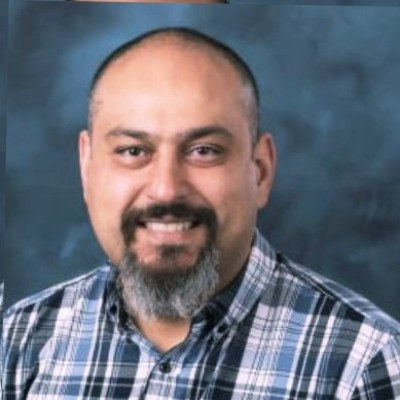
Amir Shehata
Amir Shehata Main Contact
Oak Ridge National Laboratory (ORNL)
Amir Shehata is a Principal Investigator at Oak Ridge National Laboratory, where he leads efforts at the intersection of high-performance computing (HPC) and quantum computing. His work focuses on building scalable software frameworks and architectures that enable the integration of quantum systems into HPC environments. He is a leading contributor to openQSE, driving initiatives in hybrid workflows, system design, and cross-platform interoperability for emerging quantum-HPC ecosystems. He has experience organizing community activities, including leading the quantum-HPC Integration Workshop at ORNL in July 2025 and organizing a Birds-of-a-Feather session at SC Asia 2026 focused on quantum-HPC integration.
Alex Chernoguzov
Alex Chernoguzov
Quantinuum
Alex Chernoguzov is the Chief Engineer of Commercial Products at Quantinuum, where he works on quantum computing systems and software integration. His work focuses on bridging quantum hardware capabilities with software stacks to enable scalable and reliable quantum applications. He contributes to the development of hybrid quantum-classical workflows and the broader quantum computing ecosystem, including participation in cross-organizational efforts to define interoperable software interfaces and engage in community-driven technical discussions.
Andrea Delgado
Andrea Delgado
Qblox
Andrea Delgado is a roadmap leader at Qblox, where she drives product strategy and long-term planning for quantum control systems. Her work focuses on aligning hardware capabilities with emerging requirements in quantum computing and scalable system architectures. She is a key organizer within the IEEE Quantum Week (QCE) conference series, serving as Program Board Chair for QCE 2026 and previously as Technical Papers Program Chair for QCE 2025 and 2023, as well as Track Chair roles in earlier editions.
Ermal Rrapaj
Ermal Rrapaj
NERSC, Lawrence Berkeley National Laboratory
Ermal Rrapaj is a Computer Systems Engineer and quantum computing researcher at the National Energy Research Scientific Computing Center (NERSC) at Lawrence Berkeley National Laboratory. His work focuses on the intersection of scientific computing algorithms and HPC system architecture, as well as analyzing quantum computing use cases for large-scale scientific applications. His research spans quantum computing algorithms, quantum-HPC integration, machine learning for scientific workloads, and performance analysis of large-scale HPC systems.
Josh Moles
Josh Moles
Snoquera
Josh Moles is the founder and CEO of Snoquera, where he works to make resilient precision timing practical without the high-cost infrastructure it has historically required. His background spans quantum computing, custom silicon, and national security systems, from complex communication systems at the U.S. Department of State to hardware and systems programs at IonQ, Google, Intel, and Northrop Grumman covering quantum-classical integration, custom SoC validation, and embedded and FPGA design. An IEEE Senior Member, he serves on the Global Quantum Industry Group's Quantum Computing Infrastructure Advisory Board, co-moderated a panel on quantum-HPC integration at QCE 2026, and is moderating an accepted panel at Supercomputing (SC) 2026.
Lee J. O'Riordan
Lee J. O'Riordan
Xanadu
Lee J. O'Riordan is a Senior Quantum Software Developer II at Xanadu, where he focuses on advancing high-performance computing capabilities within quantum software, particularly through performance optimization of PennyLane. His work includes enabling multi-vendor CPU support, GPU acceleration, and distributed computing to improve the scalability and efficiency of quantum simulations. He specializes in template metaprogramming, SIMD, and compiler optimization.
Thomas Naughton
Thomas Naughton
Oak Ridge National Laboratory (ORNL)
Thomas Naughton is a researcher at Oak Ridge National Laboratory specializing in high-performance computing systems and software. His work focuses on scalable system architecture, performance optimization, and integration of emerging technologies into HPC environments. He contributes to advancing hybrid computing models and infrastructure for next-generation scientific workloads. He is also actively involved in community leadership, including organizing Birds-of-a-Feather sessions at the Supercomputing (SC) conference for PMIx and participating in MPI workshops and BoFs.

Materials

Slides, recordings, and other materials will be posted here after the event.

Contact

Questions about the workshop? Contact the main organizer Amir Shehata or reach the broader openQSE community on openQSE Slack.